
Yamauchi Matex HD Co., Ltd. (Vol.2)
Director Mr. Yamauchi Ikkei
Fukui City, Fukui Prefecture | Manufacturing | 100 employees~
Manufacturing and sales of round wire and profiled wire of non-ferrous metals and precious metals such as titanium, and processing and sales of metal materials for eyeglass frames
May 20, 2026
Moving Beyond "Everyone is Kind" — Building a Support System for Retaining Foreign Engineers
Yamauchi Matex Co., Ltd. is a manufacturing company rooted in the local community, specializing in material processing for products like eyeglasses and medical devices, as well as the maintenance and product inspection of manufacturing dies.
In this article, we spoke with Director Kazuyoshi Yamauchi, the on-site supervisor, and Henry, a foreign engineer who is now in his third month at the company, to learn about the company’s approach to onboarding and supporting foreign engineering talent.
Key Points
- After three months, there are clear signs that Henry is steadily learning the work.
- Tasks such as judging surface scratches and understanding meetings require support from both a Japanese language and experience-based perspective.
- Kindness on the shop floor is an important foundation, but long-term retention also requires Japanese language education and a clear growth design.
Many companies want to hire foreign engineers. At the same time, they often have concerns. Will instructions be understood on the shop floor? Will the burden on the people in charge of onboarding become too heavy? After hiring, will the engineer be able to settle in and stay with the company?
In the manufacturing and construction industries, expectations for international talent are high, but the anxiety surrounding onboarding is equally real. In particular, handling detailed confirmations in Japanese, making quality-related judgments, and providing post-onboarding follow-up are common pain points for many businesses.
At Yamauchi Matex Co., Ltd., foreign engineer Henry has just reached his third month. We sat down with Executive Director Ikkei Yamauchi and Henry’s supervisor to discuss his current progress, the successes they’ve seen, and the challenges that have emerged.
Three Months After Joining: Clear Progress in Learning the Work
Henry is currently responsible for die maintenance and inspecting product surfaces for defects or scratches.
When he first joined the company, he was able to handle around two pieces per day. Now, he can complete around four pieces per day. Skilled workers handle around eight pieces per day, so Henry is still in the process of developing his skills. Even so, at the three-month mark, the number of tasks he can perform is steadily increasing.
On the shop floor, the general consensus is positive: "He has no problem with the work itself, and he catches on fast." In fact, the company notes that his learning speed rivals or even exceeds that of typical domestic hires.
However, memorizing a procedure is one thing; making nuanced on-the-spot judgments is another. Now that Henry is comfortable with his initial tasks, his third month has brought the next set of challenges into focus.
The Real Challenge: Evaluating Defects Over Taking Measurements
The hardest part of the job for new international talent often lies in defect inspection.
When it comes to dimensions, numbers can be used for confirmation. It is relatively easy to check whether something meets or does not meet a standard. Scratches, however, vary depending on their type and condition.
During the interview, the team noted: "Dimensions have a single right answer, but scratches come in countless patterns. It simply takes experience." This is not a challenge unique to foreign workers; it is a skill that domestic Japanese hires also take time to master.
While Henry easily confirms clear-cut, definitive metrics like dimensions, he still faces a language barrier when trying to double-check nuanced, experience-based judgments. Asking questions like "What exactly should I look for?" or "Which part should I double-check?" regarding new materials or technical details requires a higher level of Japanese.
To bridge this gap, the team does not just explain things once. They inspect the actual parts together, utilizing a combination of translation apps, simple English, and simplified Japanese as needed.
When Team Meetings are Difficult, One-on-One Follow-Ups Fill the Gap
Language barriers extend beyond immediate tasks.
Henry mentioned that during team meetings, where native Japanese speakers talk to one another, it can be difficult to catch everything. He finds it particularly challenging when multiple people speak at a fast pace.
However, he expressed deep gratitude for the one-on-one breakdowns his team provides afterward.
Expecting a new international hire to perfectly understand every meeting from day one is unrealistic. What matters most is whether the information necessary for their specific job is ultimately communicated.
Frontline supervisors and senior colleagues listen patiently, use simple English when necessary, and Henry responds in simple Japanese. By repeating this process, communication on the shop floor is growing organically day by day.
The Power of Feeling "Everyone is Kind"
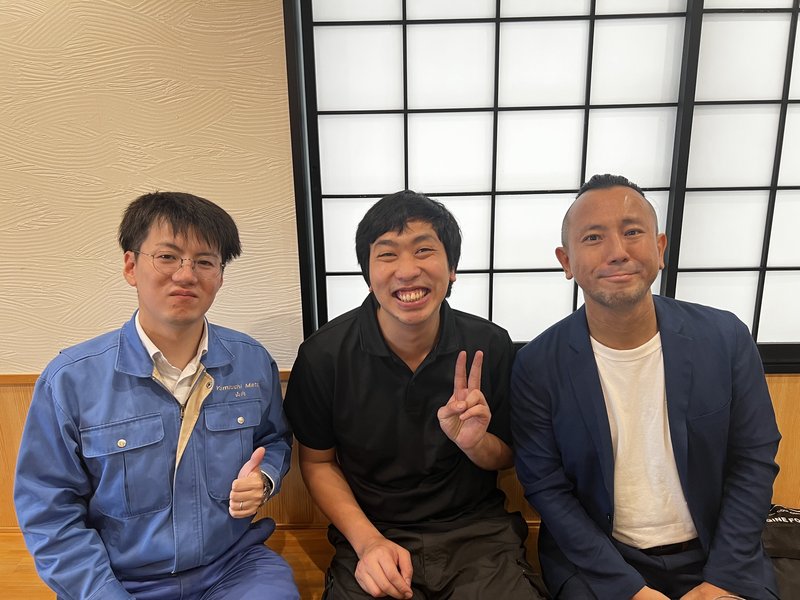
Throughout the interview, Henry repeatedly said, "Everyone is kind."
They check in on him when he looks stuck, use simple English, and even remember his usual lunch orders. These small actions resonate deeply with him.
Yamauchi Matex also hosts monthly lunch gatherings. These events provide a relaxed space to chat about things outside of work, helping to build relationships naturally over time.
For foreign engineers, moving to Japan is a massive life change that goes far beyond the workplace. Having people they can talk to comfortably and feeling truly accepted by their team forms the bedrock of employee retention.
However, a welcoming atmosphere alone does not guarantee long-term retention. Kindness is merely the foundation.
Upon that foundation, companies must layer structured language education, operational support, and a clear vision for career growth.
Language Education: A System to Relieve the Frontline Burden
In tandem with his daily work, Henry is actively studying Japanese.
He takes online lessons twice a week for two hours per session, a program projected to last about a year and a half. The curriculum goes beyond basic grammar and vocabulary; it focuses heavily on practical workplace communication, such as confirming instructions, reporting/communicating/consulting (Hou-Ren-So), and asking follow-up questions after team meetings.
Crucially, this language education is not left entirely up to Henry's personal effort. It is a corporate system designed to reduce the burden on shop floor supervisors.
For instance, being able to ask, "Is this defect acceptable?" or confirming after a meeting, "Is this what I need to do today?" makes a massive difference.
When an engineer can voice their doubts instead of staying silent, it becomes significantly easier for supervisors and senior peers to guide them.
When onboarding foreign engineers, relying solely on the goodwill of the frontline staff is a recipe for burnout. Language education and operational follow-ups must be viewed not as separate initiatives, but as a unified system.
How to Create a Sense of Growth and Purpose
Right after joining a company, everything is new, making it easy for employees to feel like they are growing. However, once basic tasks are mastered, the work can begin to feel repetitive.
Henry has successfully doubled his daily output from two units to four, yet veterans handle eight. He currently stands in a transitional phase where he can feel both his progress and the remaining gap between himself and the experts.
At this stage, the key is communicating what his current tasks are leading toward.
His current work in die maintenance and defect inspection is the essential foundation for future responsibilities, such as die design and understanding the entire manufacturing process. When an employee realizes they aren't just repeating the same task, but are building the bedrock for their next career step, their perspective on daily work changes completely.
Onboarding should never feel like an OJT (On-the-Job Training) with no end in sight. Explaining the meaning behind today's work and showing them the next milestone is a universal rule for nurturing talent—regardless of nationality.
Turning the First Employee’s Experience into a Company Blueprint
The next step for Yamauchi Matex is to leverage Henry’s experience for future international hires.
Henry is already compiling advice for the next foreign engineer joining the company. Based on his own journey, he is sharing insights on foundational knowledge to study beforehand, what items to bring to Japan, and what they can leave behind.
This is more than just personal kindness. When the first hire passes their learnings down to the next, it transforms individual experience into institutional knowledge for the company.
Moving forward, the company is considering having Henry help manualize key tasks and quality judgment criteria. This process of manualization helps the next person, but it also gives Henry an opportunity to organize and solidify his own understanding.
However, highly conscientious workers often take on too much. To prevent burnout, it is vital to manage their workload carefully—for example, allocating 30 minutes to an hour within official working hours for these tasks, rather than letting it bleed into their personal time.
Structured Post-Hiring Support is the Key to Retention
Henry’s third month has illuminated both great promise and clear areas for growth.
His learning speed is excellent, and his capabilities have expanded significantly since day one. On the other hand, navigating experience-based tasks like defect inspection and keeping pace with team meetings remain hurdles where language and experience intersect.
Even so, Henry’s repeated phrase—"Everyone is kind"—proves that the team's supportive attitude is reaching him loud and clear. One-on-one check-ins, the bilingual approach, monthly lunches, structured language education, and a shared roadmap for his future are all working together to build a robust foundation for retention.
Hiring international engineers does not end on their first day. True success lies in identifying their operational progress, language levels, technical judgment capacity, and lifestyle anxieties early on, and then tackling frontline support and language education as a combined package.
Transforming the reassurance of a "kind workplace" into tangible professional growth, and turning the first hire's experience into a blueprint for the next
—this is the sustainable path forward for foreign engineer retention.
If you have concerns about hiring foreign engineers or building an onboarding framework tailored to your unique workplace, please feel free to reach out to us for a consultation.