
Joytam Co., Ltd.
President / Representative Director Munehisa Nemoto
Kazuno City, Akita Prefecture | Manufacturing | 100 employees~
Manufacturer of control panels, distribution boards, switchboards, and electrical wiring harnesses
Jan. 20, 2026
Why we were able to decide even with zero track record
— As of last November, Zuitt had no implementation track record yet. Even so, why did you decide to accept the first cohort?
I had been interested in the “Gijinkoku” visa category (Engineer/Specialist in Humanities/International Services) for some time. What ultimately convinced me was my trust in CEO Kato, the founder of RareJob, and the fact that they provide hands-on support all the way through to Japanese-language proficiency. For specialized roles, language often becomes the bottleneck, so having a partner who can handle that was a big deal.
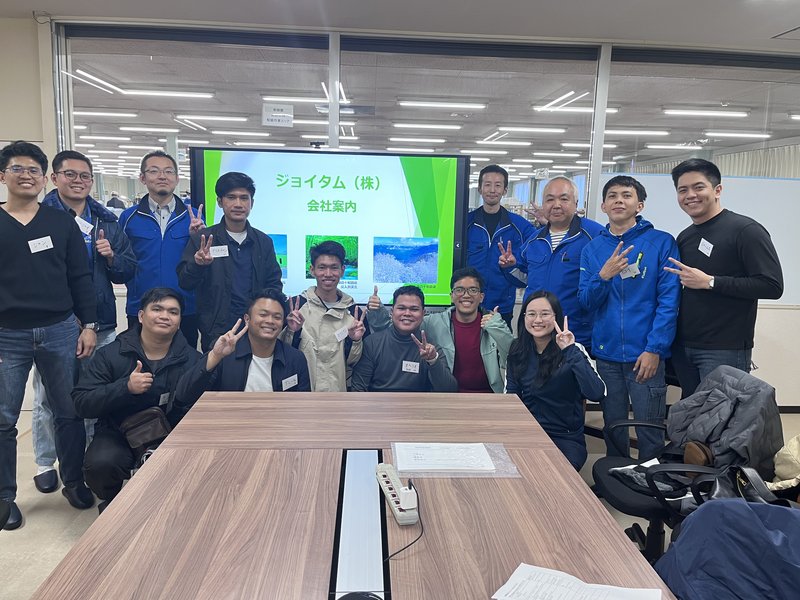
What we learned from a one-day trial with 15 people
— You accepted 15 participants for a work-experience day. How did you design the task, and what did you evaluate?
We set a task where they work as a team to read drawings and produce an output within a time limit. We focused on their collaborative attitude, punctuality, and initiative
Why we hired three people even after missing our top choices
— The applicants you ranked highest went to other companies. Why did you still decide to hire three?
There are virtually no electrical design talents available in the market. We judged it more rational to develop them as a group so they can learn and improve by competing and encouraging one another.
Changes we expect within the first year after assignment
— After formal placement in the fall, what changes do you expect to see in the first 6 to 12 months?
I expect the workplace to become brighter, and I hope motivated young people will inspire our Japanese employees as well. I want to nurture early seeds of Kaizen proposals and quality improvements.
Our answers to concerns about “language, job-hopping, and on-site resistance”
— Other presidents often worry about (1) Japanese ability, (2) people leaving for big cities, and (3) resistance from the shop floor. What’s your view?
- Language: In an era of AI interpretation, insisting on “native-level is a must” is outdated. Our employees also need to meet them halfway.
- Job-hopping: Moving to big cities happens with Japanese workers too. If we raise our company’s value and improve compensation, people will stay.
- On-site resistance: We’ve already had successful experiences with the Specified Skilled Worker program, and after a one-day trial, those anxieties disappear.
The “Kazuno model”: government support plus company investment
— What operations are needed to accept workers in rural areas—commuting, housing, and so on?
We’ve already made use of subsidies for renovating vacant homes. This time, we’re building a new apartment complex near the factory—10 one-room (1K) units—and we will subsidize half the rent.
Our talent strategy going forward
— What’s your long-term strategy for continuously securing top talent?
Our standard is excellence, not nationality. We envision a future where even management positions are predominantly held by foreign nationals.
Three tips for rural manufacturers
— Finally, please share your advice.
- Rural areas should make even more use of foreign talent. There aren’t many other options.
- Even if it doesn’t work out, the risks other than money are small. Treat it as an investment in the next 5 to 10 years.
- The younger the management, the more they have to look 10 years ahead (or try to). That’s exactly why they can make bold moves.