Metal Engineer Co., Ltd.
Director Mr, Soman Noboru
Hakusan City, Ishikawa Prefecture | Manufacturing | 63 employees
Sheet metal processing, press processing, and die/mold design and manufacturing. With a wide range of equipment, including laser combination machines, standalone laser machines, turret punch presses, press brakes, and press machines, Metal Engineer proposes the optimal production method based on each product’s shape and production volume.An integrated production system that supports everything from prototyping to mass production.
June 3, 2026
Improvement Proposals Within Two Months: How On-Site Design Helps Foreign Engineers Become True Contributors
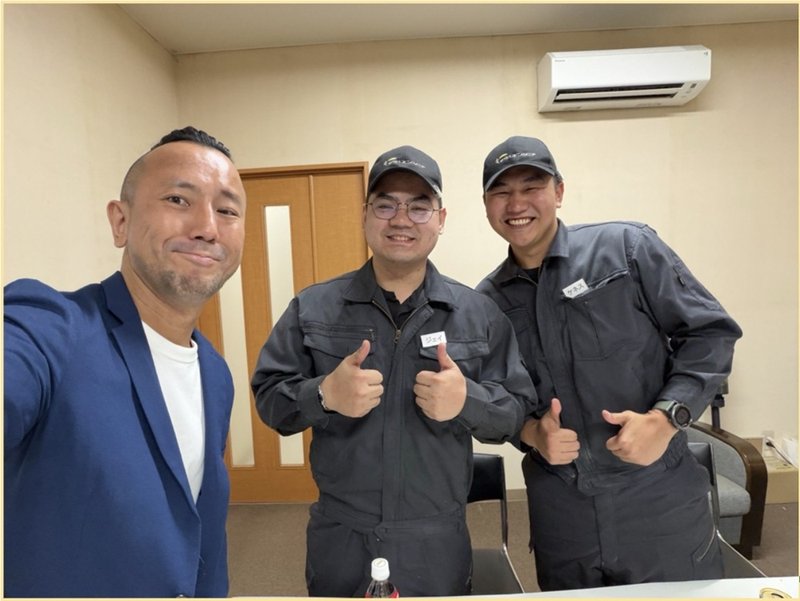
Metal Engineer, based in Ishikawa Prefecture, is a manufacturing company engaged in press processing, laser cutting, bending, machining, and other metalworking operations.
In this article, we spoke with President Soman of Metal Engineer, as well as Factory Manager Sakumoto, supervisors involved in the onboarding process, and the Filipino engineers themselves, to learn how the workplace has changed since the company began accepting foreign engineers.
Key Points
- Foreign engineers become true contributors only when there is a clear on-site onboarding design.
- Language barriers can be reduced not only through Japanese language ability, but also through better confirmation methods.
- Improvement proposals and long-term retention require management to design roles and respond constructively to new ideas.
Many companies are interested in hiring foreign engineers. At the same time, they often have concerns. Will the language barrier be a problem? Will Japanese employees on the shop floor carry too much of the burden? Even after investing time in training, will the engineers leave after only a few years?
For small and medium-sized manufacturers in regional Japan, accepting foreign talent is a topic that brings both expectations and concerns.
At Metal Engineer in Ishikawa Prefecture, hiring Filipino engineers was not simply a way to fill labor shortages. The company was already busy keeping daily production running, but there were also many issues on the shop floor that needed improvement. However, when everyone is occupied with the work in front of them, it is not easy to allocate enough time to improvement activities or automation.
That is where the company saw potential in foreign engineers who could understand the actual workplace and, in the future, become involved in improvement initiatives.
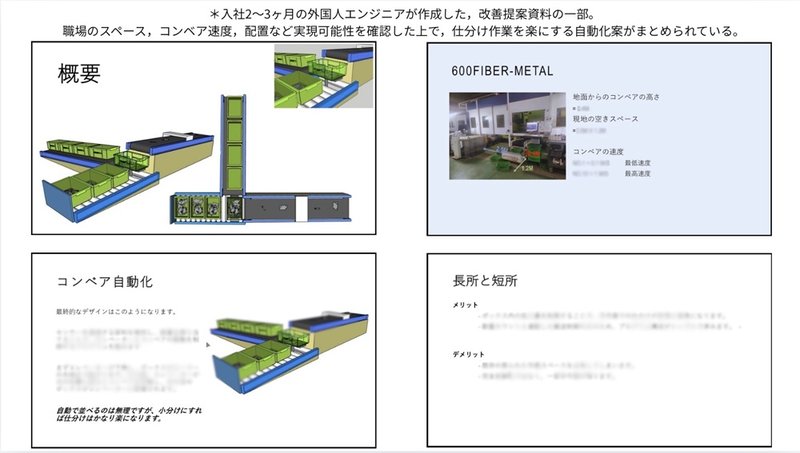
Around two to three months after joining the company, the engineers prepared approximately 30 pages of improvement proposals. Their ideas covered areas such as sorting products after laser processing, conveyors, automation, and space-saving box designs. They spoke with people on the shop floor and considered details such as product weight, movement, and box shape.
President Soman and Factory Manager Sakumoto were surprised by the proposals, but they welcomed them positively.
“Whether we can do it or not is one thing, but the fact that they are making proposals makes me very happy.”
This statement reflects the company’s expectation that foreign engineers are not merely additional labor, but people who can be developed into future improvement talent.
Do Not Treat Them as Immediate Experts. First, Let Them Understand the Workplace
At Metal Engineer, the Filipino engineers are not assigned permanently to a single department from the start. Instead, they are designed to experience multiple departments, rotating approximately every two months.
They learn across different processes, including press processing, laser cutting, bending, machining, and the administration department. The purpose is to help them understand the company’s overall manufacturing process.
This is not just about teaching them individual tasks. The goal is for them to see which processes take time, where mistakes are likely to happen, and which operations have room for improvement. By first observing the actual workplace, they can eventually connect that understanding to practical improvement proposals.
The engineers themselves see this environment positively.
“The work is a little difficult, but it is fun.”
“I learned a lot.”
Of course, every time they move to a new department, they need to learn new technical terms, people’s names, and work procedures. They also shared that they feel tired after work. Even so, being able to observe different processes has become a meaningful learning opportunity for them as engineers.
What matters in hiring foreign engineers is not assigning everything to them from the beginning. Companies need to decide in what order the engineers will learn the workplace, and at what stage their roles will expand. Having this design before accepting foreign engineers is the first step toward helping them become true contributors.
There Are Language Barriers. That Is Why Confirmation Methods Need to Change
At the same time, language-related difficulties did occur on the shop floor.
Workers need to read instructions written in Japanese or kanji, send products to the next process, check quantities, and make sure items are placed in the correct location. In a manufacturing environment, even small misunderstandings can lead to mistakes.
In fact, when the engineers first joined the company, similar mistakes happened about five or six times a month. Now, those mistakes have decreased to around one or two times a month.
One person on the shop floor described the change this way:
“At first, they made similar mistakes about five or six times a month, but now it is more like once or twice.”
This improvement did not happen only because of the engineers’ own efforts. The workplace also gradually adjusted how it accepted and supported them.
“They have only been here for two or three months, so it is natural that there are things they do not understand.”
That mindset was important. The company did not expect perfection from the beginning. It also did not judge them by the same standards as Japanese employees or foreign employees who had already been working there for several years.
On top of that, the way instructions were confirmed also changed.
Simply asking, “Do you understand?” is not enough. Even when they feel unsure, foreign engineers may answer, “Yes, I understand.” They may not want to take up their supervisor’s time. They may feel it is difficult to say they do not understand. Or they may genuinely think they have understood, even when there is still a misunderstanding.
That is why it became important to ask them to explain what they understood and what they did not understand. In addition, supervisors asked them to repeat what they were about to do before starting the task.
The engineers also developed their own strategies. Before starting work, they would check by pointing with their fingers, mark items with a pen, or quietly talk themselves through the steps as they proceeded.
People on the shop floor described them as “very serious and diligent in that sense.”
Language barriers will not disappear completely. However, mistakes can be reduced by creating a confirmation system instead of leaving everything to the individual workplace. When accepting foreign talent, it is important not to see Japanese language ability as the only issue. Companies also need to design how instructions are communicated and confirmed on site.
Developing Improvement Proposals Into Business Decisions
The 30 pages of improvement proposals were one of the most symbolic outcomes of this onboarding experience.
These proposals were not random ideas. The engineers looked at real issues on the shop floor, such as how to sort products after laser processing, how to align products inside boxes, and whether conveyors or sensors could be used for automation. They thought through these issues in their own way based on what they had actually observed.
The company responded positively to the proposals.
“It was something that even Japanese employees had not really brought up, so it was very good. Their evaluation went up.”
At the same time, what matters for management is not simply saying, “That was a good proposal.”
To actually implement an idea, the company needs to examine cost-effectiveness. How much would it cost? How much work time could be reduced? Are there similar examples from other companies? Instead of introducing the idea across the entire workplace at once, where could the company start small and test it?
In other words, for a proposal to become part of a management decision, it needs to be considered from the perspectives of ROI, precedent, and small-scale implementation.
The company is not looking at these proposals only in terms of whether they can be adopted immediately.
“It is okay even if it fails. Let’s try starting with the parts we can do.”
Because the company responds in this way, the engineers can feel that it is acceptable to share their ideas.
To bring out the initiative of foreign engineers, simply evaluating their proposals is not enough. Companies need to receive those proposals seriously, think together about cost-effectiveness and feasibility, and gradually develop them into practical initiatives.
Retention Is Not Decided by Salary Alone
The long-term retention of foreign engineers is not determined by salary alone. It also cannot be solved only through Japanese language education.
At Metal Engineer, people on the shop floor regularly speak to the engineers, asking things like, “How are you?” and “Are you okay?” The engineers have also built relationships with senior employees from Vietnam and Bangladesh. With colleagues who can speak English, they can have deeper conversations and ask for advice more easily.
The engineers themselves said that people in the workplace are “kind” and that “they teach us when we do not understand.”
These human relationships form an important foundation for retention.
At the same time, balancing work, overtime, and Japanese language study can be demanding. In the first few months after arriving in Japan, even working eight hours a day can be exhausting. While respecting the engineers’ independence, it is essential to create an environment where they can ask for help when they need it.
Looking three, five, or ten years ahead, companies need to design one more layer of support.
The more capable these engineers become, the more valuable they will be to other companies as well. That is why companies need to think carefully about roles, compensation, relationships, and opportunities to train junior employees.
The first year can be positioned as a period for understanding the workplace. After that, how will they be involved in improvement and automation? When junior foreign employees join the company, can they move from being welcomed to becoming people who welcome and support others? Can they feel that their ideas are being used inside the company?
Long-term retention is not simply a matter of hoping good people will stay. It depends on whether management can create an environment where employees feel that they can grow, that their roles can expand, and that they have colleagues and a place within the company.
The Results of Hiring Foreign Engineers Depend on Onboarding Design
This case shows that hiring foreign engineers is not the end of the process.
At first, there will be language barriers. Mistakes will happen. Japanese employees on the shop floor will need to spend time teaching them. There will also be periods when the engineers struggle to balance work and Japanese language study.
However, with a clear onboarding design, these concerns can be reduced.
Do not expect perfection from the beginning. Adjust expectations based on the fact that they are still only two or three months into the company. Let them rotate through departments and understand the workplace. Confirm instructions through repetition. Develop their proposals from the perspectives of ROI and small-scale implementation. And think about their roles three to five years into the future.
This accumulation of small design choices is what turns foreign engineers from “additional labor” into true contributors.
For companies that are interested in hiring foreign engineers but feel uncertain about how to accept and support them, the first step may be to organize what kind of onboarding design is possible in their own workplace.