Recruitment of foreign nationals calculated backwards
from retention and active participation.
Pre-hiring "1-Day Internship" conducted for free.
- The worksite judges compatibility and aptitude (cannot be determined by documents or interviews).
- We accompany them with education, including Japanese, for up to 10 years (raising them as executive candidates).
- Systematizing retention (aiming first for "foreign nationals training foreign nationals").
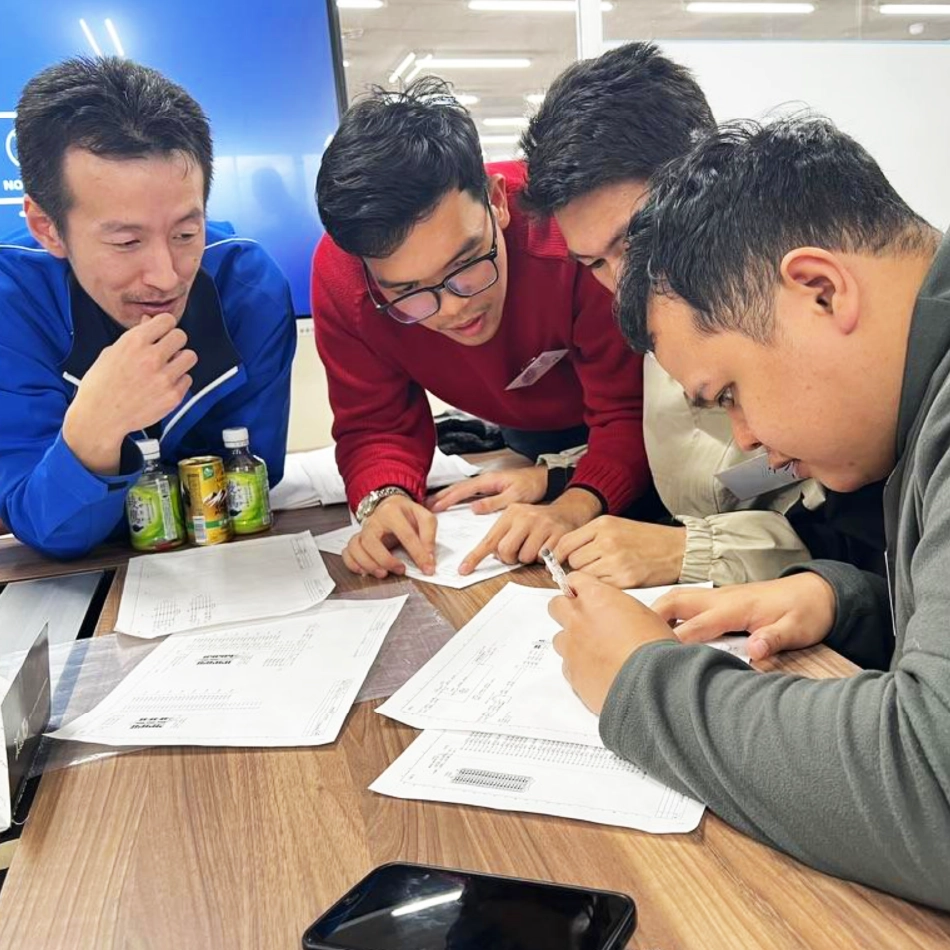
Job offers from over 550 companies.
From competition for customer acquisition to competition for talent acquisition.
In the past, sales capabilities to secure work were the lifeline of a company.
However, now is an era where "if we had the talent, sales would grow further."
Many business owners have already realized this.
That the domestic talent market is depleted, and the hiring of young people is reaching its limit.
Graduates of foreign universities are easier to hire. The candidate pool is overwhelming.
However, know-how is required for selection, retention, and making them an effective workforce.
That is why Zuitt proposes this.
A new system that does not make hiring the goal, but is calculated backwards from retention and active participation.
Zuitt's Solution
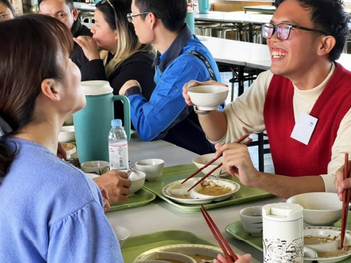
“You cannot determine from resumes or interviews who will settle in and play an active role.”
Retention and active participation are 70% determined at the time of hiring. By working together for one day, the worksite can judge compatibility and aptitude regarding who has the skills necessary for your company, interest in your company's operations, and good compatibility with the team.
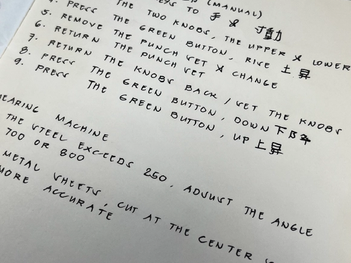
“Japanese isn’t understood, and the worksite bears the burden.”
Zuitt's core business is education. After hiring, we will continue to support Japanese language education for up to 10 years. We develop executive candidates into executives, rather than mere laborers. We utilize the know-how from executive training at overseas subsidiaries of major Japanese companies.

“Even after you go to the trouble of developing them, will they move to another company with higher pay and change jobs right away?”
Zuitt’s revenue is tied to the outcomes of development and retention. Through presenting clear career paths and development plans, providing regular mentoring, and more, we support building a system in which foreign employees develop foreign employees. We are serious about fostering a strong bond that creates the feeling, “I want to keep working at this company.”
Zuitt's Strengths
A development package for Japanese companies provided by the No. 1 training institution in the Philippines
Zuitt is an education professional that, as one of the largest engineer development institutions in the Philippines, has supported the careers of more than 10,000 people.




-
Track Record 01
Overwhelming development capability — Total number of people developed:
10,000+
Producing engineer talent in fields such as mechanical, electrical, civil engineering, architecture, and IT.
Also providing education and retention support for Specified Skilled Worker personnel and technical intern trainees. -
Track Record 02
Trusted by companies — Number of companies with job offers and hires:
550+
Graduates are active across a wide range of industries, from startups to large enterprises.
-
Track Record 03
Proof of educational quality — Training implementations and partner organizations:
100+ companies and universities
Conducting new employee and executive training at Japanese companies that demand world-class technology and discipline, such as the Philippine subsidiaries of Denso and Fujifilm.
Solving Japan’s challenges
- Addressing the severe labor shortage
- Measures to address the succession issue
- Maintaining and enhancing international competitiveness
- Responding to the declining birthrate and aging population
A win-win relationship
- Companies: Securing excellent long-term talent
- Students: Opportunities to acquire cutting-edge technology
- Society: A foundation for sustainable growth
- Mutual development cooperation
An investment in the future
- A global talent network
- Creating innovation through diversity
- Building an international cooperation model
- Developing the next generation of leaders
Featured in a special segment by NHK and other major media outlets
NHK Fukui
Aired on May 23, 2025
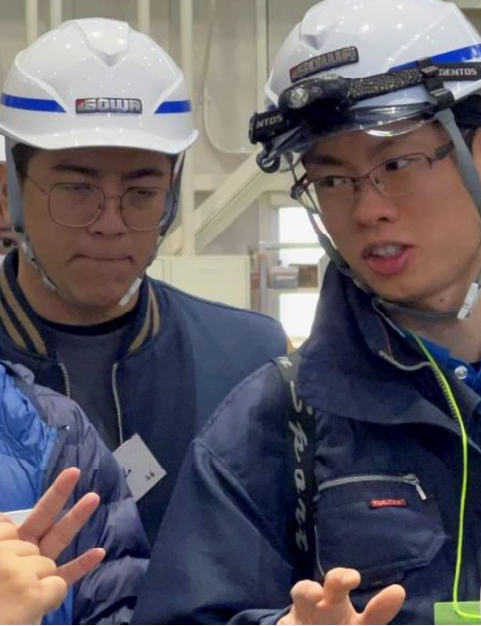
Philippine university students visit worksites
“I’m very happy to be able to put into practice, on cutting-edge machines, the theoretical things I learned at university. If I have the opportunity, I would like to work in Japan.” - Participating Filipino student
Kanagawa Shimbun
Published on September 19, 2025
Voices of surprise have also been raised by the management of the host companies at the high level of their eagerness to learn.





List of ZUITT’s main services
List of ZUITT’s main services
Available as a package or as a single service
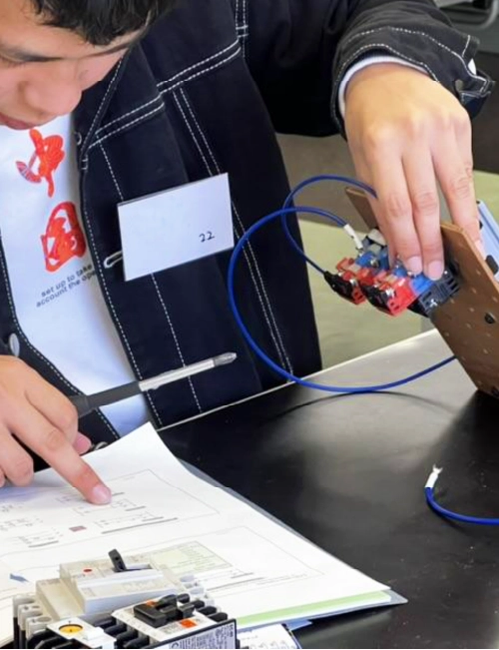


One-day job experience
Even if you can’t tell in an interview, you can assess them by having them work for one day.
We bring foreign personnel to your factory or work site,
Site tour → hands-on work → lunch → hands-on work → conversation, etc.,
This is a program that lets you spend time together and confirm for yourself.
- Manufacturing
- Construction
- IT industry
- Other industries
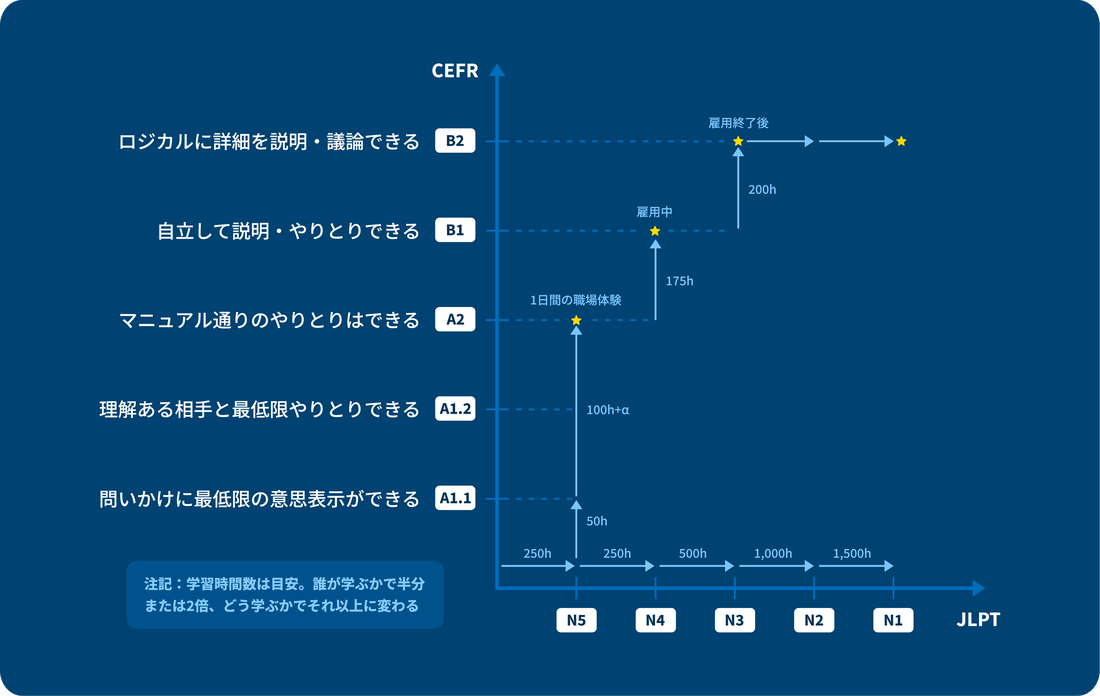
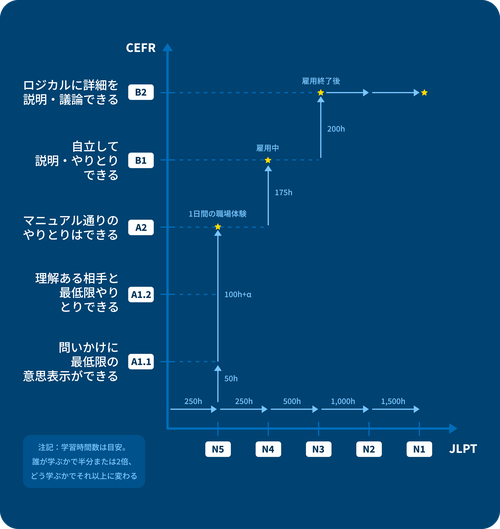
Japanese-language training
We develop Japanese proficiency by alternating between foundational skills and conversational ability.

Retention Support
A proven record of long-term employment
With 10 years of close support, we design both their path to becoming effective contributors and their retention.
A key reason foreign talent leaves early is that they “cannot see their future.”
Zuitt’s “10-year package” provides a roadmap to resolve these kinds of concerns.
- Japanese, cross-cultural, and new-employee training
- Early identification of concerns
- A development cycle led by senior foreign employees
List of service target roles
| Services | Engineers | Other Highly Skilled Talent | Blue-collar Workers |
|---|---|---|---|
| One-day internship | Supported | Supported | - |
| Japanese and other training (before departure / after employment) | Supported | Supported | Supported |
| Retention support | Supported | Supported | - |
A 10-year package to develop foreign executives, starting with a one-day job experience
The 10-year executive development process
Starting with a one-day job experience, we develop true executive candidates over 10 years.
Applicable to all industries, including manufacturing, construction, and the chemical industry.
-
01. One-day job experience
Outstanding Philippine university students (mechanical, electrical, science, architecture and civil engineering, information engineering, etc.) experience Japan’s worksites. A valuable opportunity to encounter cutting-edge technology and understand company culture.
-
02. Pre-employment training (6-12 months)
Train Japanese proficiency and more up to the level required as a condition for the job offer.
-
03. Full-time hiring and retention (up to 10 years)
Full-time hiring on the premise of long-term retention. Through rotational assignments across departments, they understand the company’s operations as a whole and gain experience as future executive candidates.
-
04. Executive promotion (from year 10 onwards)
Through leadership training and preparation to participate in management, they move into management and executive positions after 10 years. As next-generation leaders with a global perspective, they lead the company’s growth.
How It Works
First, please feel free to contact us.
01. Web meeting
Please contact us using any of the methods below.
- Book an online meeting with Representative Tomohisa Kato
- Consult by phone with our Japan representative, Suzuki
- Contact us via the inquiry form
02. On-site Visit
Even within the same industry, what each company does is completely different.
We visit the actual site and discuss the optimal acceptance, development, and retention.
03. Conducting the one-day job experience
We bring two groups of 6-8 engineers, one day per group.
Voices From Companies

Profile of Successful Candidates
Many outstanding students with strong motivation to learn and a desire to work in Japan are participating.
Rich international experience, capable from IoT to industrial equipment, A skilled professional dreaming of a breakthrough in Japan
A versatile engineer proficient in both software and hardware, from IoT development (C++) to PLCs and medical device maintenance. With training experience in China and Dubai, they possess solid technical capability. Supported by deep love for family—covering a younger sister’s tuition—and a sincere passion to “succeed in Japan as an electronics engineer,” they face difficulties with persistence and integrity. With a strong admiration for Japan, they are an immediately effective engineer who brings reassurance and energy to the worksite.

Ruby
Graduated from PHINMA-University of Pangasinan
Electronics Engineer | Electronics Technician
Leadership Award | Best Thesis & Design Project
Special Scholar Award
A hands-on engineer with perseverance and versatile skills
Well-versed in automatic control using Arduino and renewable energy design, with broad experience from maintenance to customer support. In university, they balanced academics and sports as a full scholarship student. Now, as the main provider supporting family members including a younger brother who is ill, they have cultivated the ability to overcome difficult circumstances with perseverance. With exceptionally high responsibility and patience, they bring strong on-site responsiveness and sincerity. Hoping to contribute for the long term as a member of a company in the Japan they admire and to build their family’s future together, they achieved hiring by their desired company as an engineer.

JM
Graduated from University of Negros Occidental–Recoletos
Mechanical Engineer | Sports Scholarship Student
Best Thesis Prototype
High academic achievement and rich practical experience— A standout talent in mechanical engineering
An exceptionally talented mechanical engineering student who graduated at the top of their class from Polytechnic University of the Philippines. In addition to 300 hours of hands-on automotive maintenance work at Ford, they also have research experience in the clean energy field—talent that combines “theory and practice.” They hold a safety and health officer qualification and have extensive leadership experience in student organizations. Strongly motivated to absorb Japan’s advanced technology, they are a future technical leader candidate with both sincerity and a drive to improve.

Gian Paolo. A
Graduated from Polytechnic University Of The Philippines
Faculty of Engineering | Major in Mechanical Engineering
AutoCAD, SMAW (shielded metal arc welding)
Engineers’ satisfaction level
99.5%Based on our survey results
Number of engineers hired to date
20+2025–present
Number of companies that have hired
15+2025–present

Basic Information
Frequently Asked Questions
Foreign nationals who are likely to stay and succeed share common traits.
- They have established study habits
- They have strong interest in the work itself
- They intend to settle in Japan even before coming to Japan
At Zuitt, from among candidates who meet the above conditions, we bring to Japan recent and second-recent graduates from science and engineering faculties such as the following.
- They have been able to study Japanese before coming to Japan, such as “4 hours every weekday × 4 months,” etc.
- They are willing to continue studying even after receiving a job offer (for example, about 3,000 hours to reach N1 including conversation)
- They do not have circumstances that assume a short-term return home, such as taking over a family business
It differs by company, but as a guideline it is about 8 hours. Here is one example flow.
1.Orientation (about 1 hour): engineer self-introduction and company overview
2.Worksite tour (about 1.5 hours): confirm areas of interest, observation skills, and safety awareness
3.Individual task (about 1 hour): confirm basic skills and thought process
4.Lunch (about 1 hour): confirm compatibility and communication habits
5.Group task (about 2.5 hours): confirm collaboration, leadership, and perseverance (plus a short meeting with management and HR as needed)
6.Presentation and feedback (about 0.5 hour): reflection and photo taking
At the time they come to Japan, their Japanese is not yet at the work level for engineers, but on-site staff are assumed to use Japanese. Pre-translation of tasks and interpretation on the day are possible with generative AI.
Whether they grow is determined not by nationality, but by the person’s qualities and the development design.
In the one-day job experience, after having them experience actual work elements, the worksite can judge aptitude by name—such as “For this role, not A but B.”
Development methods vary greatly by job type.
Even within civil engineering, required skills differ between construction management and BIM/CAD.
Even in manufacturing, maintenance and similar roles may require designing explanations of scope of work and residence status.
In some cases, we receive evaluations such as “Because they have a foundation from what they studied at university, they may catch up in six months to an area that takes inexperienced Japanese workers three years,” etc. (depending on the job type and acceptance structure).
We cannot make the resignation risk zero. However, we can reduce it through systems, not through individual effort.
- We do not recommend hiring only one foreign employee (they are more likely to become isolated)
- Depending on their orientation (urban-oriented / design-oriented, etc.), suitability differs
- At the outset, we share an initial 10-year career design as a hypothesis, rather than unclear OJT with no outlook
- We adjust the periods when they should focus on Japanese study and when to increase the weight of practical work
- Together, we build a future structure where “foreign employees develop foreign employees” (mentors and role models)
It depends on how much you want to grow your performance.
If Japanese hiring is going well, perhaps 10% annual growth with only Japanese staff may be possible.
On the other hand, sales often tend to have an upper limit determined by the number of core personnel.
In construction, qualified personnel such as construction managers; in manufacturing, roles such as design, maintenance, and field engineers.
We do not recommend hiring a large number of foreign employees all at once.
It is realistic to start with 2–3 people, and have the first cohort develop the second, and the second develop the third.
Hiring and making them effective contributors takes time. Looking back from your performance plan, how much time do you have left?
Also, at the one-day job experience stage, you do not need to “commit to hiring.”
We believe it is a comparison between whether it is a risk for the worksite to obtain primary information about “whether there is someone who fits our company,” or whether it is a risk to postpone hiring without having primary information.
I believe you are seriously thinking that utilizing foreign talent is essential for the company 10 years from now.
Could we hold a strategy discussion on how you should talk about it internally?
What top management tends to worry about is generally the following three.
- Failing and being embarrassed (face risk)
- Their existing way is denied (authority risk)
- The company becomes unstable (control risk)
- It may be good to convert the proposal into the following form.
- Start small (narrow the budget, period, and scope)
- Be able to stop at any time (set withdrawal conditions in advance)
- Rephrase to align with the president’s values (words of protection rather than offense / words of certainty)

Company Information
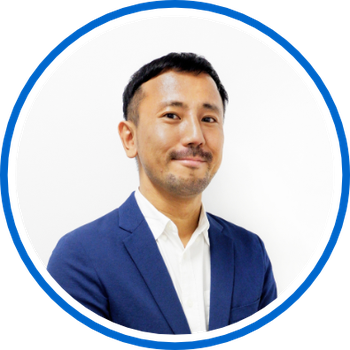
Representative Kato Tomohisa’s vision
A major social significance that will save Japan in the future
In Japan, where the declining birthrate and aging population are progressing, utilizing outstanding foreign nationals is an unavoidable issue. It is important to build relationships in which we can grow together through true partnership, not by securing disposable labor.